
Quick Answer
Dementia can be hereditary, but most cases are not directly inherited. Having a parent or close relative with dementia may increase your risk, but it does not mean you will develop it. Genetics is only one factor, alongside age, health, lifestyle, and other influences.
Key Takeaways
- Dementia can have a genetic component, but most cases are not caused by a single inherited gene.
- A family history of dementia can increase your risk.
- Some rare forms of Alzheimer’s disease and other dementias can be inherited.
- Certain genes increase the risk of dementia without guaranteeing that a person will develop it.
- Age, cardiovascular health, lifestyle, and other factors can also affect dementia risk.
- Genetic testing may provide information about risk in certain situations, but it cannot always predict whether someone will develop dementia.
Introduction
When dementia affects someone in your family, it is natural to wonder whether you could develop it too. You may ask, “Is dementia hereditary?” or worry that memory problems could be passed from one generation to the next.
The answer is not always straightforward. Dementia describes a group of conditions that affect memory, thinking, and other cognitive abilities. Alzheimer’s disease is the most common cause, but other types include vascular dementia, Lewy body dementia and frontotemporal dementia.
While some forms have a strong genetic connection, most cases involve a combination of genetics, age, health and other risk factors. Understanding your family history can help put your individual risk into perspective.
What Is Dementia?
Dementia is not a single disease. It is a general term for problems with memory, thinking, communication, and other cognitive abilities that interfere with everyday life.
Dementia becomes more common with age, but it is not a normal part of getting older. Different conditions can cause dementia, and each may have different causes, symptoms, and risk factors.
Genetics can play a role in some forms of dementia, while age, health conditions, lifestyle, and other factors can also influence a person’s risk.
Is Dementia Hereditary?
Dementia can run in families, but that does not necessarily mean it is directly inherited.
If a parent or sibling has dementia, you may have a higher risk than someone without a close family history. However, family members share more than genes. They can also share lifestyle habits, environmental factors, and a tendency toward certain health conditions.
For example, high blood pressure, diabetes, high cholesterol, and cardiovascular disease can affect brain health and are associated with dementia risk. If several members of a family have these conditions, their increased risk may reflect both inherited susceptibility and shared health factors.
The age at which a relative developed dementia can also provide useful context. Dementia developing later in life is much more common than dementia occurring at a young age. A pattern of several relatives developing dementia before age 65 may raise more concern about an inherited form.
How Does Genetics Affect Dementia Risk?
Genes play a role in how our bodies work, and some genetic variations can affect the risk of certain diseases. Dementia is no different. However, having a genetic risk does not always mean a person will develop dementia.
Some genes can increase the risk of dementia, while a few rare genetic changes can directly cause certain inherited forms. Understanding this difference is especially important when looking at Alzheimer’s disease.
Risk Genes and Alzheimer’s Disease
One of the best-known genes linked to Alzheimer’s risk is APOE-ε4. Having this gene variant can increase the chance of developing late-onset Alzheimer’s disease. The risk may be higher for people who inherit two copies.
However, APOE-ε4 does not mean that someone will definitely develop Alzheimer’s. People without this variant can also develop Alzheimer’s disease. This is why genetic risk should not be viewed as a prediction.
Genes Linked to Inherited Alzheimer’s Disease
A small number of Alzheimer’s cases are linked to inherited changes in three genes:
- APP
- PSEN1
- PSEN2
These genetic changes can cause familial Alzheimer’s disease, which often develops at a younger age and may affect several generations of a family.
If a parent carries one of these disease-causing genetic changes, their child has a 50% chance of inheriting it. However, familial Alzheimer’s disease is rare and accounts for about 5% of all Alzheimer’s cases.
Alzheimer’s vs. Dementia: What’s the Difference?
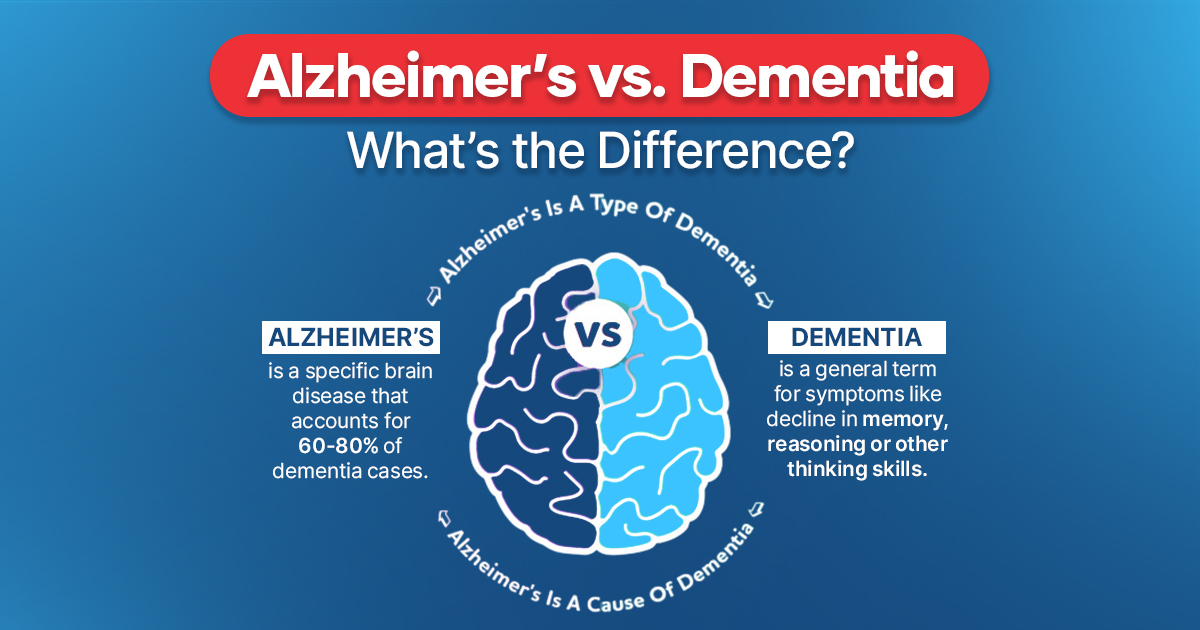
Dementia and Alzheimer’s disease are not the same thing. Dementia is an umbrella term, while Alzheimer’s disease is a specific brain disease that can cause dementia.
Think of dementia as a group of symptoms rather than one specific condition. Alzheimer’s is one of the conditions that can lead to those symptoms. Other causes include vascular dementia, Lewy body dementia, and frontotemporal dementia.
This distinction is important when discussing genetics. Some genetic factors are linked specifically to Alzheimer’s disease, while other forms of dementia may have different genetic or health-related causes.
Can Other Types of Dementia Be Hereditary?
Alzheimer’s is not the only type of dementia that can have a genetic link.
Frontotemporal dementia can run in families, and some cases are linked to inherited genetic changes. A strong family history, especially when symptoms appear at a younger age, may suggest a higher genetic risk.
Vascular dementia is usually linked to problems with blood flow to the brain rather than a single inherited gene. However, family-related risks for conditions such as high blood pressure, diabetes and heart disease may also influence a person’s risk.
Lewy body dementia can also involve genetic factors, although most cases are not directly inherited.
Overall, the role of genetics depends on the type of dementia, family history, and age when symptoms develop. Having dementia in your family can increase your risk, but it does not mean that you will necessarily develop it.
Clinical Trials for Alzheimer's Disease
Hope Starts with Alzheimer’s Research
See if you qualify for an Alzheimer’s clinical trial and help move research forward while exploring potential new treatment options.
Can You Reduce Your Risk of Dementia?
You cannot change your genes or family history, but you can take steps to support brain health and address some factors linked to cognitive decline:
- Stay physically active with regular exercise.
- Eat a balanced, nutritious diet.
- Get enough quality sleep.
- Keep your mind active through learning, hobbies and social activities.
- Manage conditions such as high blood pressure, diabetes and high cholesterol.
- Avoid smoking and limit alcohol consumption.
These habits cannot guarantee that you will prevent dementia, but they can support your overall health and may help lower some risk factors.
Should You Have Genetic Testing?
Genetic testing cannot usually tell you whether you will develop dementia. Some tests can identify genetic variants linked to Alzheimer’s risk, such as APOE-ε4, but carrying the variant does not mean you will definitely develop the disease.
Testing may be considered when dementia appears across several generations or at a younger age. If you are considering testing, talk with a healthcare professional or genetic counselor first.
When Should You Talk to a Doctor?
Consider speaking with a healthcare professional if:
- Several close relatives have developed dementia.
- Dementia has occurred at a young age in your family.
- You notice ongoing changes in memory, thinking, or daily activities.
- You want to understand your family’s genetic risk.
A healthcare professional can review your family history and help determine whether further evaluation or genetic counseling may be appropriate.
Dementia and Clinical Research
Researchers continue to study why dementia develops, what contributes to cognitive decline, and why it affects people differently. Ongoing research is helping improve our understanding of the genetic, biological, and other factors involved in dementia.
Clinical research studies give researchers an opportunity to explore potential risk factors, improve how dementia is diagnosed, and evaluate new approaches to treatment and care. Similarly, neurology research studies may examine changes in the brain, memory, thinking, and other neurological functions.
Some studies may involve people living with dementia, while others may focus on individuals with a family history or specific risk factors. For example, Alzheimer’s disease clinical trials may involve people with Alzheimer’s or individuals who meet specific risk factors or study criteria.
Clinical Trials for Alzheimer's Disease
Hope Starts with Alzheimer’s Research
See if you qualify for an Alzheimer’s clinical trial and help move research forward while exploring potential new treatment options.
Conclusion
So, is dementia hereditary? It can be, but having a family history does not mean dementia is inevitable. Genetics may influence your risk, but age, overall health, and other factors also matter. Understanding your family history can help you have a more informed conversation with a healthcare professional about your individual risk and brain health.
As researchers continue to learn more about dementia and its causes, clinical research may also help advance our understanding of future treatment options. Zillan Clinical Research supports ongoing research that may contribute to progress in neurological health and dementia care.
Frequently Asked Questions
Is dementia genetic?
Dementia can have a genetic component, but most cases result from a combination of genetic, age-related, health, and environmental factors.
If my mother has dementia, will I get it?
No. Having a mother or another close relative with dementia may increase your risk, but it does not mean you will definitely develop dementia.
What type of dementia is most hereditary?
Familial Alzheimer’s disease and some forms of frontotemporal dementia have strong hereditary links. These rare forms are caused by specific genetic changes that can be passed from a parent to a child.
Can you reduce your risk of dementia?
You cannot change your age or genetics, but you can address some risk factors. Regular exercise, a healthy diet, managing blood pressure and diabetes, avoiding smoking, and staying mentally and socially active may help support brain health.
Can genetic testing predict dementia?
Genetic testing can identify certain risk-related or disease-causing variants, but it usually cannot predict with certainty whether someone will develop dementia.

1 Comment