Quick Answer
Uterine fibroids are noncancerous growths that develop in or around the uterus. They form from the muscle and connective tissue of the uterine wall and can vary in size, number, and location. While some women experience no symptoms, others may have heavy menstrual bleeding, pelvic pain, abdominal pressure, or reproductive difficulties. Treatment depends on the fibroids’ size, location, symptoms, and whether a woman plans to become pregnant. Options include monitoring, medications, minimally invasive procedures, and surgery.
Key Takeaway
- Uterine fibroids are common, noncancerous growths that develop in the uterus.
- Their exact cause is unknown, but hormones and genetic factors may contribute to their development.
- Symptoms can include heavy periods, pelvic discomfort, frequent urination, and lower back pain.
- Some women have fibroids without experiencing noticeable symptoms.
- Diagnosis commonly involves a pelvic examination and imaging tests, such as ultrasound.
- Treatment is based on individual symptoms, reproductive goals, and overall health.
Introduction
Uterine fibroids are among the most common gynecological conditions affecting women during their reproductive years. Although these are non-cancerous growths in the uterine wall, they can affect menstrual health, daily activities, and reproductive well-being.
Some women discover they have fibroids during routine gynecological examinations, while others seek medical attention because of heavy periods, persistent pelvic discomfort, or difficulty becoming pregnant.
Understanding what uterine fibroids are, why they develop, and how they are diagnosed can help women recognize potential symptoms and make informed decisions about their health.
What Are Uterine Fibroids?
Uterine fibroids, medically known as leiomyomas or myomas, are growths that develop from the smooth muscle cells and connective tissue of the uterus. They can appear individually or in groups and may range from very small growths to masses large enough to change the size and shape of the uterus.
Fibroids are benign, meaning they are not cancerous. Although rare cancerous growths can occur in the uterus, these are generally not considered to develop from existing fibroids.
Fibroids can also behave differently from one person to another. Some remain small and cause no symptoms, while others grow over time and contribute to menstrual problems, pelvic pressure, or other complications.
Importantly, the presence of fibroids does not automatically mean treatment is necessary. Many women can manage the condition through regular monitoring.
Can Uterine Fibroids Be Cancerous?
Uterine fibroids are benign growths that develop in or around the uterus. Although they are sometimes described as tumors in the uterus, they are generally harmless and do not turn into cancer. A rare cancer called leiomyosarcoma can develop in the uterus, but it is not considered to arise from an existing fibroid. Any unusual or concerning symptoms should be evaluated by a healthcare provider.
What Are the Different Types of Fibroids?
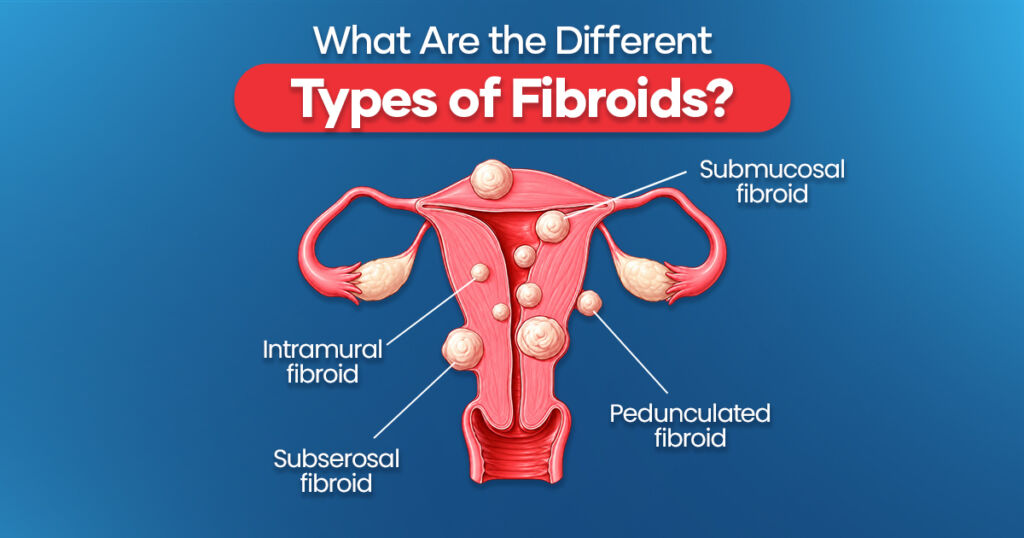
Fibroids are classified according to where they develop in or around the uterus. Their location can influence the symptoms they cause and the management approach a healthcare provider recommends.
1. Intramural Fibroids
Intramural Fibroids develop within the muscular wall of the uterus. They are among the most common types and may cause the uterine wall to expand as they grow. Depending on their size and position, they can contribute to heavy menstrual bleeding and pelvic pressure.
2. Submucosal Fibroids
These develop beneath the inner uterine lining and may extend into the uterine cavity. Even relatively small growths in this location can contribute to heavy or prolonged menstrual bleeding. They may also interfere with implantation and affect fertility in some women.
3. Subserosal Fibroids
These develop beneath the outer surface of the uterus and grow outward into the pelvic area. Larger growths may press against nearby organs, including the bladder or bowel, contributing to frequent urination or constipation.
4. Pedunculated Fibroids
These attach to the uterus through a narrow stalk. They may develop on the outer surface or extend into the uterine cavity. If the stalk twists, it can cause sudden and severe pain that requires medical evaluation.
What Causes Uterine Fibroids?
The exact causes of uterine fibroids are not fully understood. However, research suggests that hormonal, genetic, and biological factors contribute to their development.
Some of the factors associated with fibroid growth include:
Hormonal influences: Estrogen and progesterone are hormones involved in regulating the menstrual cycle and supporting pregnancy. They also appear to influence fibroid growth. This may explain why fibroids commonly develop during the reproductive years and often shrink after menopause.
Genetic factors: Changes in certain genes within uterine muscle cells may contribute to fibroid development. Women with a family history of fibroids may also have a higher likelihood of developing them.
Growth factors: Certain substances in the body that regulate cell growth and tissue repair may influence how fibroid cells develop and multiply.
Other biological influences: Researchers continue to investigate how inflammation, metabolic factors, and environmental exposures may contribute to fibroid development.
It is important to understand that having one or more risk factors does not mean someone will necessarily develop uterine fibroids. Their development likely involves several interacting factors rather than one identifiable cause.
Are Uterine Fibroids Hereditary?
Genetics may play a role in their development. Women with a family history of fibroids may have a higher likelihood of developing them, although inheritance does not guarantee that the condition will occur.
Who Is More Likely to Develop Fibroids?
Certain factors are associated with a greater likelihood of developing fibroids:
- Age: They are more common during the reproductive years, particularly as women approach their 40s and early 50s before menopause.
- Family history: Having a close relative with fibroids may increase the likelihood of developing them.
- Race: Black women are more likely to develop fibroids, often at younger ages, and may experience more severe symptoms.
- Body weight: Obesity has been associated with an increased likelihood of fibroid development.
- High blood pressure: Research has identified an association between hypertension and fibroids.
These risk factors do not determine whether someone will develop the condition.
What Are the Common Symptoms?
The signs of fibroids in women vary depending on their size, number, and location. Some women experience significant discomfort, while others have no noticeable symptoms.
Common uterine fibroid symptoms include:
- Heavy menstrual bleeding: Periods may become heavier, last longer, or occur more frequently than usual.
- Pelvic pain or pressure: Fibroids may cause a feeling of heaviness, fullness, or discomfort in the lower abdomen.
- Frequent urination: Larger fibroids may press against the bladder, creating the need to urinate more often.
- Constipation: Pressure on the bowel can make bowel movements difficult.
- Lower back pain: Fibroids may contribute to discomfort in the lower back or pelvic region.
- Pain during sexual intercourse: Depending on their position, fibroids may cause discomfort during sex.
- Anemia: Heavy menstrual bleeding can lead to iron deficiency anemia, which may cause fatigue, weakness, and dizziness.
Not every woman experiences these symptoms, and their severity does not always correspond to fibroid size. Even smaller fibroids can cause considerable menstrual bleeding when they develop in certain locations.
Persistent or unusually heavy menstrual bleeding, ongoing pelvic pain, or changes in normal menstrual patterns should be discussed with a healthcare provider.
Do Uterine Fibroids Cause Pain?
They can. Some women experience pelvic pressure, menstrual cramps, lower back discomfort, or pain during intercourse. The severity and location of uterine fibroid pain can vary depending on the size and position of the growths.
Sudden, severe pelvic pain requires prompt medical evaluation, particularly if it occurs alongside other concerning symptoms.
Can Uterine Fibroids Cause Weight Gain?
Fibroids do not directly cause overall body weight gain. However, larger growths may increase abdominal size and create a feeling of fullness or bloating. Any unexplained or persistent abdominal enlargement should be evaluated by a healthcare provider.
Can Uterine Fibroids Affect Fertility and Pregnancy?
Not every woman with fibroids experiences fertility problems. Many conceive naturally and have healthy pregnancies.
However, certain growths may affect reproductive health depending on their location and size. For example, submucosal fibroids may interfere with embryo implantation or change the shape of the uterine cavity.
During pregnancy, fibroids may sometimes be associated with:
- Pelvic pain or discomfort.
- Increased risk of miscarriage in certain cases.
- Preterm labor or delivery.
- Changes in the baby’s position.
- A higher likelihood of cesarean delivery.
- Increased bleeding after childbirth.
These complications do not occur in every pregnancy. Women planning to conceive or experiencing fertility concerns should discuss their individual circumstances with a gynecologist.
Are Uterine Fibroids Dangerous?
Most fibroids are not life-threatening. However, their effects can vary depending on their size, location, and associated symptoms.
Heavy menstrual bleeding may lead to iron deficiency or anemia, while larger growths can put pressure on nearby organs, such as the bladder or bowel. Some may also affect fertility or increase the likelihood of certain pregnancy complications.
This does not mean every woman with fibroids will experience these problems. Medical evaluation can help determine whether monitoring or treatment is appropriate.
Uterine Fibroids Clinical Trials
Your Journey Could Help Shape Better Care
Find Uterine Fibroids clinical trials and see if you may qualify to support research for new treatment options.
How Are Uterine Fibroids Diagnosed?
Diagnosis generally involves reviewing symptoms, medical history, and examination findings. Healthcare providers may recommend imaging tests to confirm the presence of growths and determine their size, number, and location.
Common diagnostic methods include:
- Pelvic examination: A healthcare provider may identify changes in the size or shape of the uterus during a gynecological examination.
- Ultrasound: This commonly used imaging test uses sound waves to create pictures of the uterus and surrounding structures.
- Magnetic resonance imaging (MRI): MRI provides detailed images and may help identify the exact location, size, and number of fibroids.
- Hysteroscopy: A thin instrument with a camera is inserted through the vagina and cervix to examine the inside of the uterus.
- Blood tests: A complete blood count may be recommended to check for anemia, particularly when heavy menstrual bleeding is present.
The tests required depend on individual symptoms and initial examination findings.
What Are the Treatment Options?
Uterine fibroids treatment depends on symptoms, growth characteristics, age, overall health, and future pregnancy plans. Not every woman needs immediate treatment. Some may only require regular monitoring.
1. Watchful Waiting
When growths are small and do not cause noticeable problems, healthcare providers may recommend monitoring them over time. Periodic examinations or imaging tests can help identify changes.
2. Medications
Medications may help manage symptoms, particularly heavy menstrual bleeding and menstrual discomfort.
Common options include:
- Hormonal birth control: May help regulate menstrual cycles and reduce heavy bleeding.
- GnRH medications: These affect hormone production and may temporarily shrink fibroids or reduce bleeding.
- Tranexamic acid: A nonhormonal medication that helps reduce heavy menstrual bleeding.
- Pain relievers: Certain medications may help manage cramps and discomfort.
Some medications manage symptoms without removing growths, while others may temporarily reduce their size.
3. Minimally Invasive Procedures
Several procedures can treat fibroids without removing the uterus.
- Uterine artery embolization: Blocks the blood supply to fibroids, causing them to shrink over time.
- Radiofrequency ablation: Uses heat energy to destroy targeted fibroid tissue.
- MRI-guided focused ultrasound: Uses focused ultrasound energy to heat and destroy selected tissue.
These approaches have different benefits and limitations. Their suitability may depend on fibroid characteristics and future pregnancy plans.
4. Surgical Treatments
Surgery may be considered when symptoms are significant or other approaches are unsuitable.
Two common options include:
- Myomectomy: Removes fibroids while preserving the uterus. It may be considered for women who wish to maintain the possibility of pregnancy. However, new growths can develop afterward.
- Hysterectomy: Involves removing the uterus and is a definitive treatment. Pregnancy is no longer possible following this procedure.
Women should discuss the potential benefits, risks, and long-term considerations of each approach with their healthcare providers.
How Is Research Advancing the Understanding of Uterine Fibroids?
Although several treatment options are available, researchers continue to study why fibroids develop, what influences their growth, and how they affect women’s health. Ongoing research is also exploring ways to manage symptoms while considering factors such as reproductive health and future pregnancy plans.
Clinical research plays an important role in this process. Uterine fibroid clinical trials evaluate investigational medications and treatment approaches, helping researchers learn more about their safety, effectiveness, potential side effects, and suitability for different patients.
Some areas of investigation include understanding the hormonal and genetic factors associated with fibroid development, evaluating approaches to reduce heavy menstrual bleeding, and studying treatment options that may preserve the uterus.
These research efforts contribute to broader knowledge of gynecological conditions and help inform future approaches to women’s healthcare. Participation in a clinical trial is voluntary, and investigational treatments may not be effective or appropriate for everyone.
Uterine Fibroids Clinical Trials
Your Journey Could Help Shape Better Care
Find Uterine Fibroids clinical trials and see if you may qualify to support research for new treatment options.
Conclusion
Uterine fibroids are common, and their effects can vary from one woman to another. While some women experience no symptoms, others may face heavy menstrual bleeding, pelvic discomfort, or reproductive challenges. Understanding the possible causes, recognizing symptoms, and learning about available treatment options can help women make informed decisions about their health.
Continued research is equally important in improving the understanding of women’s reproductive health. Women’s health clinical trials allow researchers to evaluate investigational approaches, explore treatment possibilities, and contribute to the development of future medical care.
As a clinical research organization, Zillan Clinical Research supports clinical trials across therapeutic areas, contributing to research efforts that may expand medical knowledge and inform future treatment approaches.
Frequently Asked Questions
1. What are the signs of fibroids in a woman?
Common signs include heavy or prolonged menstrual bleeding, pelvic pressure, frequent urination, lower back discomfort, constipation, and pain during intercourse. However, some women do not experience noticeable symptoms.
2. What causes uterine fibroids?
Their exact cause is unknown. Hormonal influences, genetic changes, and biological growth factors may contribute to their development. Family history and certain other health factors are also associated with an increased likelihood of developing them.
3. Do uterine fibroids go away?
Some may shrink naturally, particularly after menopause when estrogen and progesterone levels decrease. However, they do not always disappear completely without treatment.
4. How do you know if you have uterine fibroids?
Possible signs include heavy menstrual bleeding, pelvic pressure, abdominal fullness, and frequent urination. However, symptoms alone cannot confirm the condition. A healthcare provider may recommend a pelvic examination and ultrasound to establish a diagnosis.
5. Can uterine fibroids affect menstrual periods?
Yes. Fibroids, particularly those located near or within the uterine cavity, can contribute to heavy menstrual bleeding, prolonged periods, and menstrual discomfort. Significant blood loss may also lead to iron deficiency or anemia.
Medical Disclaimer: This blog is for educational purposes only and should not replace professional medical advice, diagnosis, or treatment. Consult a qualified healthcare provider about symptoms, diagnosis, or treatment decisions.