
Key Takeaways
- Hypothalamic amenorrhea causes periods to stop due to disrupted hormone signals.
- Low energy intake, intense exercise, stress, and weight changes can contribute.
- It can affect fertility, bone health, and overall hormone health.
- Diagnosis involves ruling out other possible causes of missed periods.
- Treatment focuses on restoring adequate energy, recovery, and hormonal balance.
- Menstrual cycles can often return when the underlying causes are addressed.
Quick Answer
Hypothalamic amenorrhea or functional hypothalamic amenorrhea (FHA) is when your period stops for three months or longer because low-calorie intake, stress, or intense exercise causes your brain to slow down reproductive hormone production.
Having your period may not always be something you look forward to, but it is an important sign that your reproductive system and hormones are functioning normally.
If your period stops for several months and you are not pregnant, one possible explanation is hypothalamic amenorrhea. This condition can happen when your body is under physical or emotional stress, does not have enough available energy, or is not getting enough nutrition to support its normal functions.
The good news is that hypothalamic amenorrhea can often improve when the factors contributing to it are identified and addressed.
What Is Hypothalamic Amenorrhea?
Hypothalamic amenorrhea, or functional hypothalamic amenorrhea (FHA), is when your period stops because your hypothalamus is not sending the usual hormone signals needed for menstruation.
The hypothalamus is a small area of your brain that helps control many important functions, including hunger, body temperature, sleep, and reproduction. It produces a hormone called gonadotropin-releasing hormone (GnRH), which helps control other hormones involved in your menstrual cycle.
Normally, GnRH signals your body to release hormones called follicle-stimulating hormone (FSH) and luteinizing hormone (LH). These hormones help your ovaries develop and release an egg during ovulation. Estrogen also plays an important role in this process.
When the hypothalamus slows down or stops releasing GnRH, the normal hormone signals become disrupted. Ovulation may stop, estrogen levels can fall, and your periods may become irregular or disappear.
This is why hypothalamic amenorrhea is sometimes described as the body temporarily shifting its focus away from reproduction when it is dealing with too much stress or not enough available energy.
What Does Amenorrhea Mean?
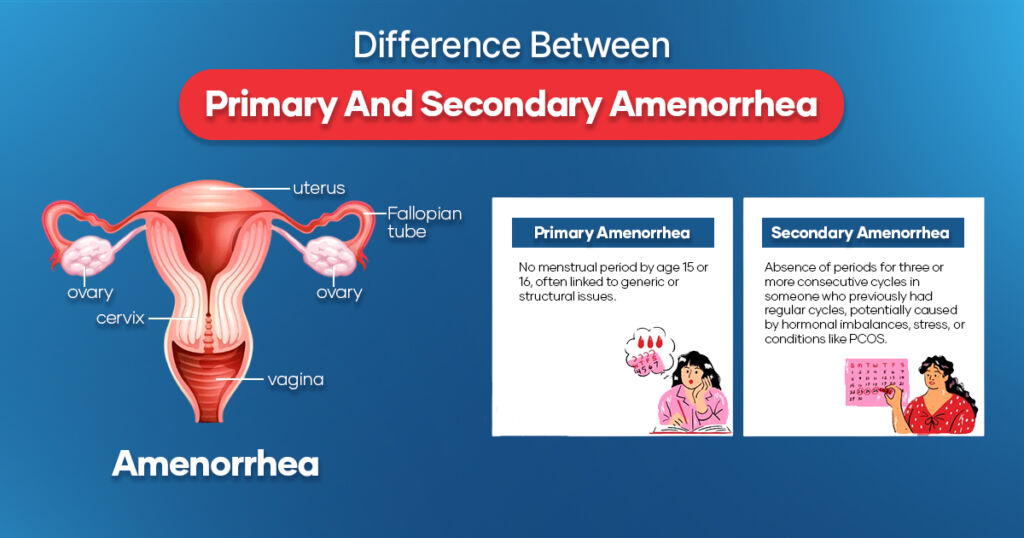
Amenorrhea simply means not having a menstrual period.
There are two main types:
- Primary amenorrhea: when someone has not had their first period by the expected age.
- Secondary amenorrhea: when someone who previously had periods stops getting them for several months.
Hypothalamic amenorrhea is generally a form of secondary amenorrhea. Medical evaluation is recommended when menstrual cycles consistently become longer than 45 days or when periods have been absent for three months or more.
What Are Hypothalamic Amenorrhea Causes?
There is usually not one single cause. Hypothalamic amenorrhea can develop when physical or emotional stress disrupts the hormone signals that control menstruation.
Common contributing factors include:
Not Eating Enough
When your body does not receive enough energy to meet its needs, it may reduce functions such as reproduction. This can happen with restrictive diets or when food intake does not match your activity level.
Intense Exercise
Frequent or intense exercise increases the body’s energy demands. When those demands are not adequately supported by nutrition, periods may become irregular or stop.
Stress
Ongoing emotional or psychological stress can affect the hormone signals involved in menstruation. If your periods stopped because of stress, factors such as work, school, relationships, anxiety, or major life changes may be contributing.
Weight Loss and Low Body Fat
Rapid or significant weight loss can affect menstrual function, particularly when related to inadequate nutrition. If your periods stopped after weight loss, it may be linked to changes in energy availability. However, you do not have to be underweighted to develop hypothalamic amenorrhea.
Eating Disorders and Disordered Eating
Restrictive eating, rigid food rules, repeated dieting, and other eating patterns that limit energy intake can interfere with normal menstrual hormone signals.
Several factors may also occur together. For example, increased exercise combined with reduced food intake and ongoing stress can place greater strain on the body.
How Common Is Hypothalamic Amenorrhea?
The exact prevalence is difficult to determine because hypothalamic amenorrhea may go undiagnosed and can have different contributing factors.
Although it is often associated with athletes and eating disorders, hypothalamic amenorrhea can also occur in teenagers and adults experiencing significant changes in stress, nutrition, or physical activity.
What Are the Symptoms of Hypothalamic Amenorrhea?
The most obvious symptom is not having a period for three months or longer.
For some people, this may be the only noticeable change. Others may experience symptoms related to low estrogen or the factors contributing to the condition.
Possible hypothalamic amenorrhea symptoms include:
- Low energy or fatigue
- Feeling hungry more often
- Feeling cold frequently
- Trouble sleeping
- Anxiety or depression
- Difficulty coping with stress
- Vaginal dryness
- Lower sex drive
- Hair loss
- Headaches
- Skin or hair changes, including acne
Not everyone will have these symptoms, and their severity can vary.
Is Hypothalamic Amenorrhea Serious?
It can be. A missing period is not always just a menstrual issue. Hypothalamic amenorrhea can lower estrogen levels, which can affect bone, cardiovascular, reproductive, and emotional health.
If it continues for a long time, it may increase the risk of:
- Difficulty becoming pregnant
- Bone loss and osteoporosis
- Fractures
- Cardiovascular problems
- Mood changes, including anxiety or depression
That is why persistent changes in your menstrual cycle should be evaluated to identify the underlying cause.
How Does Hypothalamic Amenorrhea Affect Your Bones?
One of the major concerns with prolonged hypothalamic amenorrhea is bone health. Estrogen helps maintain strong bones. When estrogen levels remain low for an extended period, bone density can decrease. Over time, this can increase the risk of osteoporosis and fractures.
This is particularly important during the teenage and young adult years, when much of your bone mass is built.
If you have not had a period for six months or longer, a healthcare professional may recommend a bone density scan or consider testing sooner if there is significant nutritional deficiency, low energy availability, or concern about fragile bones.
Can Hypothalamic Amenorrhea Affect Fertility?
Yes. Hypothalamic amenorrhea can disrupt the hormone signals needed for ovulation, making it harder to become pregnant.
However, it does not necessarily mean permanent infertility. Ovulation may return before your first period, so pregnancy is possible even when menstruation has not resumed.
If you are not trying to become pregnant, discuss contraception with a healthcare professional. If you are trying to conceive, they can assess your fertility and discuss appropriate treatment options.
Is Hypothalamic Amenorrhea the Same as PMOS?
No. Hypothalamic amenorrhea and PMOS (formerly known as polycystic ovary syndrome) are different conditions, although both can cause irregular or absent periods and problems with ovulation.
Hypothalamic amenorrhea is usually linked to disrupted hormone signaling from the hypothalamus, often in response to low energy availability, significant stress, intense exercise, or weight changes. PCOS involves a different pattern of hormonal and reproductive changes.
The key differences include:
| Hypothalamic Amenorrhea | PMOS |
|---|---|
| Often linked to low energy availability, stress, intense exercise, or weight changes | Involves hormonal and reproductive changes associated with PMOS |
| Estrogen levels are often low | Androgen levels may be higher than usual |
| Ovulation may be reduced or stop | Ovulation may be irregular or absent |
| Often occurs after changes in eating, exercise, stress, or weight | May be associated with acne, excess facial or body hair, or other symptoms |
Because several conditions can cause missed or irregular periods, an appropriate evaluation is important before determining the cause.
How Is Hypothalamic Amenorrhea Diagnosed?
There is no single test for hypothalamic amenorrhea. It is usually diagnosed by ruling out other causes of missed periods, such as pregnancy, thyroid disorders, pituitary problems, and other hormonal conditions.
Your evaluation may include:
Medical History and Examination
Your healthcare professional may ask about your menstrual history, recent weight changes, eating habits, exercise, stress, sleep, medications, and other health concerns. A physical or pelvic examination may also be performed as part of the hypothalamic amenorrhea diagnosis.
Pregnancy and Blood Tests
A pregnancy test is usually done early in the evaluation. Blood tests can then assess hormone levels and help rule out other conditions. These may include:
- Estrogen
- FSH and LH
- Prolactin
- Thyroid hormones
Additional tests may be recommended based on your symptoms and medical history.
MRI and Other Testing
Brain imaging is not routinely needed. An MRI may be considered if symptoms or test results suggest a problem involving the pituitary gland or brain, such as persistent headaches, vision changes, neurological symptoms, or signs of a pituitary hormone disorder.
Functional Hypothalamic Amenorrhea Clinical Trials
Your Cycle Changes. Research Moves Forward.
Discover Functional Hypothalamic Amenorrhea clinical trials and see if you may qualify to help advance future care options.
Is Hypothalamic Amenorrhea Reversible?
Yes, it can often be reversed. Recovery starts with identifying what may be disrupting your menstrual cycle. Treatment then focuses on addressing those factors and giving your body the energy, nutrition, rest, and support it needs to restore normal hormone function.
Depending on the cause, this may involve eating more, reducing intense exercise, managing ongoing stress, getting support for an eating disorder, or combining several approaches.
However, recovery takes time, and the timeline can vary from person to person.
How Is Hypothalamic Amenorrhea Treated?
There is no single treatment that works for everyone. Your plan should be based on the factors contributing to your amenorrhea.
This may include:
- Eating enough: Increasing food intake and improving nutrition can help restore the energy your body needs for normal hormone function. A registered dietitian can help you create an appropriate eating plan.
- Adjusting exercise: If intense or frequent exercise is contributing to amenorrhea, reducing your activity level may help your body recover.
- Managing stress: Stress reduction, adequate sleep, and psychological support can be helpful. Cognitive behavioral therapy (CBT) may be recommended in some cases, particularly when stress or disordered eating is involved.
- Hormone or fertility treatment: If periods do not return after addressing the underlying factors, a healthcare professional may consider hormone treatment. Fertility medications may also be used when pregnancy is the goal.
How Long Does Hypothalamic Amenorrhea Treatment Take?
Recovery time varies from person to person. Factors such as age, body weight, activity level, and genetics can affect how quickly your period returns. For many people, it may take three to six months of consistent treatment to start menstruating again.
Can Hypothalamic Amenorrhea Be Prevented?
Not every case can be prevented, but you can reduce some contributing factors by:
- Eating enough to support your body and activity level
- Avoiding unnecessary food restriction
- Allowing enough rest between workouts
- Managing ongoing stress
- Getting support for disordered eating
Paying attention to changes in your menstrual cycle can also help you recognize when something may need attention.
When Should You See a Healthcare Professional?
See a healthcare professional if you have not had a period for three months or longer, especially if you are not pregnant.
You should also seek evaluation if your cycles are consistently more than 45 days apart or missed periods occur with significant weight loss, restrictive eating, intense exercise, severe headaches, or vision changes.
Hypothalamic Amenorrhea and Clinical Research Studies
Researchers continue to study functional hypothalamic amenorrhea to better understand how energy availability, stress, exercise, hormones, bone health, and reproductive function are connected.
Functional hypothalamic amenorrhea clinical trials may explore different approaches to understanding or managing the condition, including its effects on ovulation, fertility, and bone health.
For those interested in participating, clinical trial recruitment depends on the study’s specific eligibility requirements. Clinical research studies may have different goals, procedures, and participation criteria, so it is important to review each study carefully and discuss participation with a qualified healthcare professional.
Functional Hypothalamic Amenorrhea Clinical Trials
Your Cycle Changes. Research Moves Forward.
Discover Functional Hypothalamic Amenorrhea clinical trials and see if you may qualify to help advance future care options.
Conclusion
Hypothalamic amenorrhea is more than a missed period. Changes in nutrition, exercise, stress, or energy balance can affect the hormones that regulate menstruation, fertility, and bone health.
The good news is that menstrual function can often return when the underlying causes are addressed. If your period has been absent for three months or longer, speak with a qualified healthcare professional to find the cause and get the right support.
Research is also helping improve our understanding of women’s health. Zillan Clinical Research is conducting women’s health research studies to support ongoing research into conditions that affect women’s health. Understanding your menstrual health and addressing changes early can be an important part of protecting your overall well-being.
Frequently Asked Questions
Can you have hypothalamic amenorrhea if you are not underweight?
Yes. You do not need to be underweight to have hypothalamic amenorrhea. Low energy availability can occur when you are exercising heavily or not eating enough, even if your weight is within a typical range.
Does hypothalamic amenorrhea mean you are infertile?
No. It can make pregnancy more difficult because ovulation may stop or become irregular, but it does not necessarily mean permanent infertility. Ovulation can also occur before your first period returns.
Does hypothalamic amenorrhea cause low estrogen?
Yes. When hypothalamic signaling is disrupted, estrogen levels can fall. Low estrogen is one reason prolonged hypothalamic amenorrhea can affect bone health and other areas of the body.
Is hypothalamic amenorrhea the same as having an irregular period?
Not necessarily. Irregular periods can have many causes. Hypothalamic amenorrhea is one possible cause and needs to be distinguished from conditions such as pregnancy, thyroid disorders, PCOS, and other hormonal or reproductive problems.
Medical Disclaimer: This blog is for general educational purposes only and is not a substitute for professional medical advice, diagnosis, or treatment. Always consult a qualified healthcare professional for related medical concerns.