Key Takeaway
- Dysthymia is an older term associated with persistent depressive disorder (PDD).
- Persistent depressive disorder involves a depressed mood lasting at least two years in adults.
- Major depressive disorder involves a combination of symptoms lasting at least two weeks.
- Dysthymia is often less intense but more persistent, while major depression may involve more pronounced symptoms.
- Both conditions can affect relationships, work, motivation, and everyday functioning.
- Persistent depressive disorder and major depressive disorder can occur together.
- Professional assessment is important for accurate diagnosis and appropriate treatment.
Quick Answer
Some people experience periods of intense depressive symptoms that affect their ability to work, maintain relationships, or complete everyday responsibilities. Others live with a persistent sense of sadness that continues for years, sometimes becoming so familiar that they begin to consider it their normal emotional state. This is where understanding Dysthymia vs Depression becomes important. Although both conditions involve depressive symptoms, they differ in their duration, symptom patterns, and diagnostic criteria.
What Is Dysthymia?
Dysthymia is an older clinical term commonly used to describe persistent depressive disorder (PDD). It refers to a long-term pattern of depressed mood that continues for an extended period and can affect a person’s emotional well-being, relationships, and daily activities.
Unlike short-term changes in mood, dysthymia tends to remain present for years. Its symptoms may be less intense than those associated with a major depressive episode, but their persistence can make everyday life challenging.
According to the National Institute of Mental Health (NIMH), persistent depressive disorder involves depressive symptoms lasting two years or longer in adults.
Common Symptoms of Dysthymia
People experiencing dysthymia may not always recognize their symptoms as signs of a depressive condition, particularly when these feelings have been present for a long time.
Common symptoms include:
- Persistent sadness or a low mood.
- Low self-esteem and self-critical thoughts.
- Feelings of hopelessness or pessimism.
- Low energy and ongoing fatigue.
- Changes in appetite, including overeating or reduced appetite.
- Sleeping too much or having trouble sleeping.
- Poor concentration and difficulty making decisions.
- Reduced interest in activities and social interactions.
Symptoms may fluctuate over time, but the underlying pattern of low mood generally remains.
An important distinction: A person with persistent depressive disorder may continue working, studying, or fulfilling family responsibilities. Being able to maintain daily routines does not mean the condition is insignificant or does not require attention.
What Is Depression?
Depression is a mental health condition that affects how a person feels, thinks, and behaves. It can influence emotional health, physical well-being, relationships, and the ability to manage everyday responsibilities.
The term depression covers several depressive disorders. One of the most recognized forms is major depressive disorder (MDD), which involves persistent depressive symptoms that can significantly interfere with daily functioning.
Unlike ordinary sadness, clinical depression is not necessarily linked to a specific event or situation. It can develop for different reasons, including a combination of biological, psychological, and environmental factors.
Common Symptoms of Depression
Symptoms can vary in frequency and intensity from one individual to another. They may include:
- Persistent sadness, emptiness, or irritability.
- Loss of interest in previously enjoyable activities.
- Feelings of guilt, worthlessness, or helplessness.
- Significant changes in appetite or body weight.
- Difficulty sleeping or excessive sleeping.
- Reduced energy and persistent fatigue.
- Trouble concentrating or making decisions.
- Withdrawal from friends, family, and social activities.
- Recurrent thoughts of death or suicide.
Not everyone experiences all these symptoms. Their severity and impact on daily functioning can also vary.
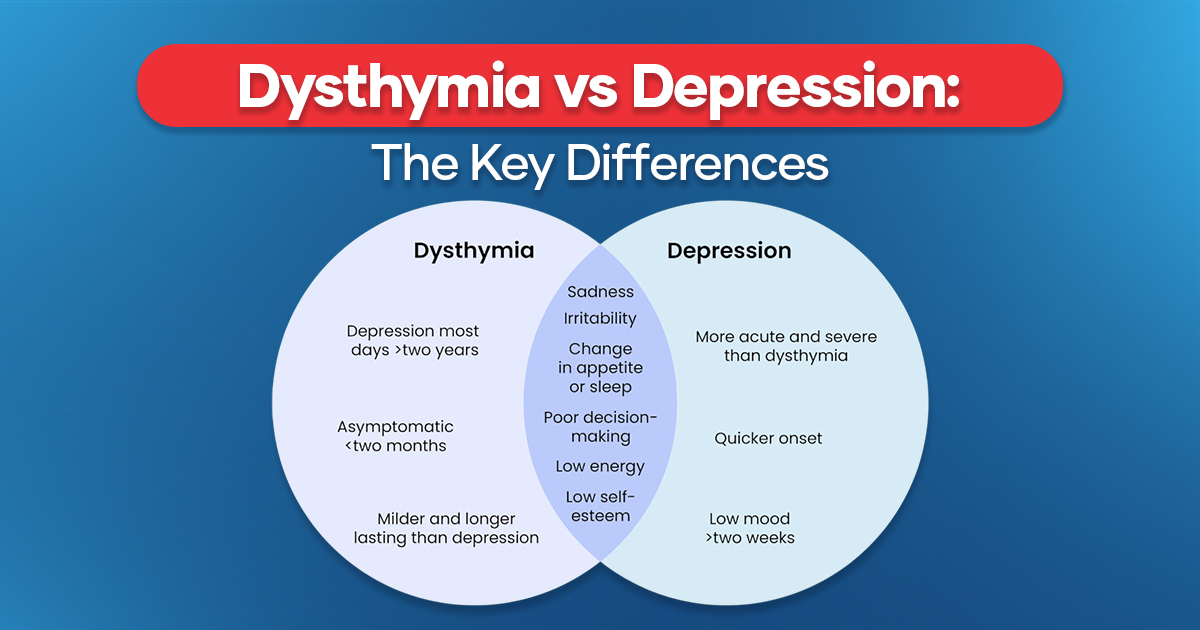
Dysthymia vs Depression: The Key Differences
Although both conditions fall under the broader category of depressive disorders, their diagnostic patterns are not identical.
The most important differences involve how long symptoms last, how they present, and how they affect a person’s everyday life.
| Comparison Factor | Dysthymia (Persistent Depressive Disorder) | Major Depressive Disorder |
|---|---|---|
| Duration | At least two years in adults | At least two weeks for a major depressive episode |
| Symptom pattern | Long-lasting, persistent low mood | Depressive episodes that may develop over time |
| Intensity | Often less intense, but can be significantly impairing | May involve moderate to severe symptoms |
| Daily functioning | A person may continue daily responsibilities despite ongoing symptoms | Symptoms may substantially disrupt everyday activities |
| Emotional experience | Ongoing sadness, pessimism, or hopelessness | More pronounced sadness, loss of interest, or emotional distress |
| Course | Chronic pattern of depressive symptoms | May occur as a single or recurrent episode |
Note: These are general diagnostic distinctions, not a way to determine an individual’s diagnosis. Persistent depressive disorder can also involve symptoms that meet the criteria for major depression.
1. Duration of Symptoms
Duration is one of the clearest distinctions between the two conditions. For adults, persistent depressive disorder involves a depressed mood occurring for most of the day, more days than not, for at least two years. During this period, symptom-free intervals generally do not last longer than two months.
In comparison, major depressive disorder involves a combination of symptoms that persist for at least two weeks and meet specific diagnostic criteria.
This means that a person can experience a major depressive episode over a relatively short period, while someone with dysthymia experiences a more prolonged pattern of depressive symptoms.
2. Severity and Intensity
Another important consideration is symptom intensity. Dysthymia is often associated with a lower intensity but persistent pattern of depressive symptoms. A person may experience ongoing fatigue, low motivation, or negative thoughts without necessarily experiencing the more pronounced symptoms associated with a major depressive episode.
Major depression can involve more intense emotional and physical changes, including a significant loss of interest, feelings of worthlessness, and difficulty maintaining everyday responsibilities.
However, lower symptom intensity does not mean persistent depressive disorder is harmless or unimportant. Its long-term impact can be substantial.
3. Impact on Everyday Life
Both conditions can affect personal and professional life, although the experience may look different.
Someone with persistent depressive disorder may continue going to work, attending school, or interacting with family while privately struggling with low mood and reduced motivation.
Someone experiencing a major depressive episode may find it increasingly difficult to complete routine tasks, maintain relationships, or participate in activities they previously enjoyed.
In either case, the effect on daily functioning is an important part of clinical assessment.
Can Dysthymia and Major Depression Occur Together?
A person diagnosed with persistent depressive disorder can also experience a major depressive episode. This pattern is sometimes referred to as double depression, although it is not a separate formal diagnosis.
For example, someone may have experienced persistent low mood, fatigue, and low self-esteem for several years. If they subsequently develop more severe depressive symptoms that meet the criteria for a major depressive episode, both conditions may be present.
This overlap is important because it demonstrates that persistent depressive disorder and major depression are not always separate experiences.
A mental health professional evaluates the person’s symptom history, duration, severity, and overall functioning to determine the appropriate diagnosis.
Major Depressive Disorder Clinical Trials
A New Path Could Start Here
Navigate Major Depressive Disorder clinical trials and see if you may qualify to support research into future treatment options.
What Causes Dysthymia and Depression?
There is no single explanation for why someone develops a depressive disorder. Research suggests that several factors may contribute to the development of persistent depressive disorder and major depression.
These may include:
- Biological factors: Genetic vulnerability, brain-related processes, and changes in biological functioning may contribute to depressive symptoms.
- Psychological factors: Persistent negative thinking, low self-esteem, and difficulty managing emotional stress may influence mental health.
- Environmental factors: Ongoing stress, traumatic experiences, difficult relationships, and major life changes may contribute to the development of depressive symptoms.
These factors do not affect everyone in the same way. Having one or more potential risk factors does not automatically mean someone will develop a depressive disorder.
How Are Dysthymia and Depression Diagnosed?
Distinguishing between the two conditions requires more than identifying a few symptoms. A mental health professional considers how long symptoms have been present, how frequently they occur, and how they affect every day functioning.
A clinical evaluation may involve:
- Symptom history: Understanding when symptoms started and whether they have remained consistent or occurred in episodes.
- Mental health assessment: Evaluating mood, motivation, sleep, appetite, concentration, and emotional well-being.
- Medical history: Reviewing existing health conditions and medications that may contribute to similar symptoms.
- Functional assessment: Understanding how symptoms affect work, education, relationships, and personal responsibilities.
In some cases, a healthcare provider may recommend physical examinations or laboratory tests to investigate medical conditions that can produce similar symptoms.
A diagnosis should always be made by a qualified healthcare professional rather than through symptom comparisons alone.
Treatment Options for Dysthymia and Depression
Both persistent depressive disorder and major depressive disorder can be managed with appropriate mental health care. Treatment recommendations depend on symptom severity, medical history, individual needs, and response to previous interventions.
Common approaches include:
Psychotherapy: Psychotherapy, also known as talk therapy, can help individuals understand their thought patterns, identify emotional challenges, and develop healthier ways of responding to difficult situations.
Cognitive behavioral therapy (CBT) is one approach that focuses on recognizing and changing unhelpful patterns of thinking and behavior.
Medication: Healthcare professionals may recommend antidepressant medications depending on the diagnosis and clinical presentation.
The choice of medication, dosage, and treatment duration should be determined by a qualified prescriber. Individuals should not start, stop, or change prescribed medication without professional guidance.
Lifestyle and Ongoing Support: Healthy routines can complement professional treatment. Regular physical activity, consistent sleep habits, social support, and stress-management strategies may contribute to overall well-being.
However, lifestyle changes should not be considered a replacement for appropriate clinical care when someone is experiencing a depressive disorder.
Is Dysthymia the Same as Depressive Personality Disorder?
Dysthymia and Depressive Personality Disorder are not interchangeable terms. Dysthymia refers to a persistent pattern of depressive symptoms and is associated with persistent depressive disorder in current diagnostic terminology.
Depressive personality disorder, on the other hand, is a historically proposed personality construct associated with enduring patterns of pessimism, self-criticism, and negative thinking. It is not a separate formal personality disorder diagnosis in the DSM-5-TR.
Although certain characteristics may overlap, the two concepts describe different clinical ideas.
This distinction matters because a long-lasting depressed mood should not automatically be interpreted as a personality characteristic. A professional assessment is needed to understand the nature of the symptoms.
When Should Someone Seek Professional Help?
Persistent sadness, reduced interest in activities, or changes in sleep and appetite should not be dismissed simply because they have become familiar.
Consider speaking with a healthcare professional if:
- Low mood continues for several weeks or longer.
- Symptoms begin interfering with work, education, or relationships.
- Sleep and appetite changes become persistent.
- Feelings of hopelessness or worthlessness become frequent.
- Everyday responsibilities become increasingly difficult to manage.
Anyone experiencing thoughts of suicide or self-harm should seek immediate help from emergency services or a qualified crisis-support professional. They should not wait for symptoms to become more severe.
Early professional evaluation can help identify the nature of the symptoms and determine appropriate care.
Exploring Research Opportunities for Depression
Mental health research continues to examine depressive disorders, treatment responses, and potential approaches to improving patient outcomes.
Clinical research studies play an important role in evaluating investigational treatments and expanding scientific understanding of conditions such as major depressive disorder.
For individuals interested in learning more about research opportunities, Psychiatry Research Studies provide information about ongoing research in mental health.
Zillan Clinical Research conducts psychiatry clinical trials, including research focused on major depressive disorder. Individuals can explore available studies and review their eligibility requirements before deciding whether to participate.
Those interested in learning more can also explore Major Depressive Disorder Clinical Trials and other Clinical Research Studies.
Participation in a clinical trial is voluntary. Eligibility depends on the specific study criteria, and investigational treatments are not guaranteed to provide a benefit.
Major Depressive Disorder Clinical Trials
A New Path Could Start Here
Navigate Major Depressive Disorder clinical trials and see if you may qualify to support research into future treatment options.
Conclusion
Understanding Dysthymia vs Depression starts with recognizing that not all depressive experiences follow the same pattern. While both conditions involve persistent emotional challenges, their duration, symptom intensity, and diagnostic criteria can differ.
Dysthymia, now commonly associated with persistent depressive disorder, involves a long-term pattern of low mood that may continue for years. Major depressive disorder, on the other hand, involves episodes of more pronounced depressive symptoms that can significantly affect daily functioning.
Neither condition should be dismissed based on how manageable symptoms may appear from the outside. Recognizing changes in mood, understanding their duration, and seeking professional evaluation are important steps toward appropriate care.
Frequently Asked Questions (FAQs)
What is the main difference between dysthymia and depression?
The main difference is the duration and pattern of symptoms. Dysthymia, associated with persistent depressive disorder, involves a long-term pattern of depressed mood lasting at least two years in adults. Major depressive disorder involves depressive symptoms lasting at least two weeks and meeting specific diagnostic criteria.
Is dysthymia less severe than major depression?
Dysthymia is often associated with less intense symptoms than a major depressive episode. However, its long-term nature can cause significant emotional distress and functional difficulties. Persistent depressive disorder can also involve major depressive episodes.
Can dysthymia turn into major depression?
A person with persistent depressive disorder can develop a major depressive episode. When both sets of diagnostic criteria are met, a healthcare professional may identify both conditions.
How long does dysthymia last?
In adults, persistent depressive disorder requires a pattern of depressed mood lasting at least two years. Symptoms may continue longer, and periods without symptoms generally do not exceed two months during that period.
Medical Disclaimer: This blog is for educational purposes only and should not replace any professional medical advice. Always consult a qualified healthcare professional about related healthcare concerns.