
Quick Answer
Tardive dyskinesia and dystonia are neurological movement disorders that can cause involuntary muscle activity. TD typically involves repetitive movements of the face, mouth, and limbs, while dystonia causes sustained muscle contractions and abnormal postures. Both can be linked to certain medications and may affect daily activities and quality of life.
Key Takeaway
- Tardive dyskinesia commonly causes repetitive movements, such as lip-smacking, chewing, and tongue movements.
- Dystonia involves involuntary muscle contractions that cause twisting, cramping, and unusual body positions.
- Both conditions can develop as side effects of dopamine-blocking medications, including certain antipsychotics.
- Tardive dyskinesia and dystonia can sometimes occur together as overlapping movement disorders.
- Symptoms can interfere with eating, speaking, walking, and everyday tasks.
- The type, frequency, and severity of involuntary movements can vary from person to person.
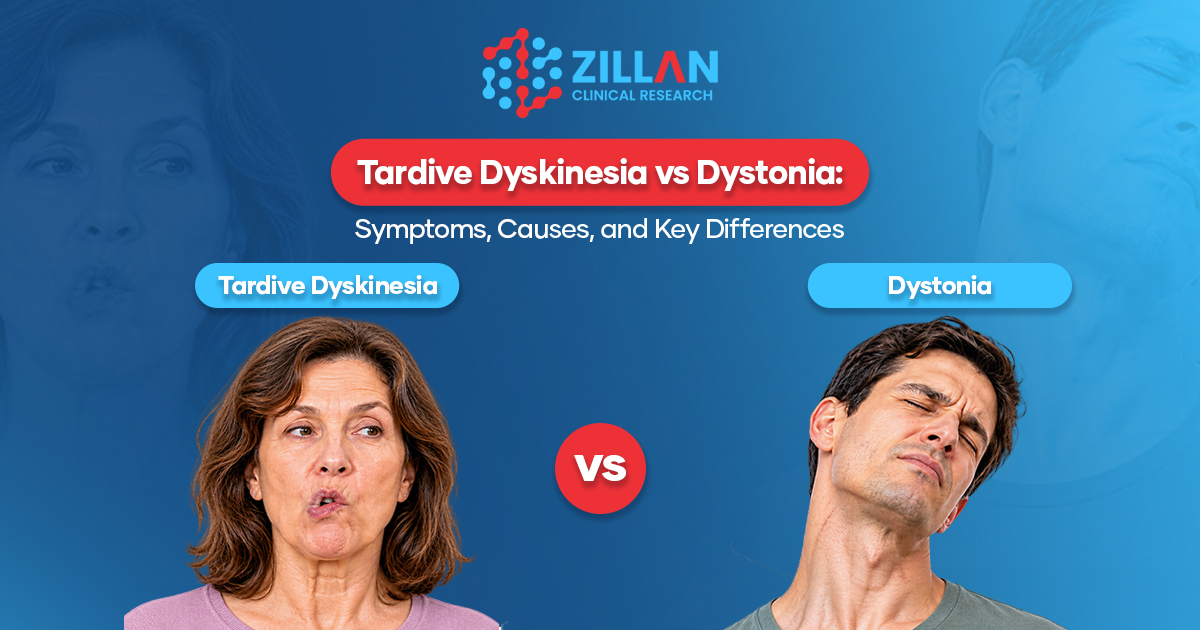
Tardive dyskinesia (TD) and dystonia are both movement disorders that can cause involuntary muscle movements, meaning movements a person cannot fully control. Both conditions can also develop as side effects of certain medications, particularly antipsychotics that affect dopamine activity in the brain. However, they differ in how these movements appear, the symptoms they cause, and how they are treated. Understanding these differences is important because the two conditions may look similar but require different approaches to diagnosis and treatment.
What Is Tardive Dyskinesia?
Tardive dyskinesia (TD) is a neurological movement disorder that causes involuntary, repetitive movements that a person cannot easily control. It often develops after long-term use of certain medications, particularly antipsychotics used to manage conditions such as schizophrenia and bipolar disorder. These medications affect dopamine, a brain chemical that helps control movement. Over time, changes in dopamine activity can lead to abnormal movements.
The word tardive means delayed, as symptoms often appear after a person has taken a medication for months or years, rather than immediately after starting it. TD commonly affects the face and mouth, causing symptoms such as lip-smacking, tongue movements, chewing motions, grimacing, and excessive blinking. It can also affect the arms, legs, fingers, and trunk, causing twitching, jerking, swaying, or rocking movements.
In some cases, these movements can make everyday activities such as eating, speaking, and walking more difficult.
What Is Dystonia?
Dystonia is a neurological movement disorder that causes involuntary muscle contractions, making certain body parts twist, cramp, or move into unusual positions. These contractions happen when the brain has difficulty controlling the signals that regulate muscle movement and coordination. They can occur repeatedly or last for longer periods, sometimes causing pain, discomfort, or difficulty with everyday activities.
Dystonia can affect different parts of the body. Depending on the areas involved, it is classified into several types:
- Focal dystonia: Affects one specific body part, such as the neck, eyelids, or hands.
- Segmental dystonia: Affects two or more nearby body parts, such as the face and neck.
- Multifocal dystonia: Affects two or more body parts that are not next to each other.
- Generalized dystonia: Affects multiple body regions, sometimes involving most of the body.
The causes of dystonia vary. Some cases are linked to genetic changes or inherited conditions, while others develop because of neurological conditions, brain injuries, or stroke. Certain medications, particularly those that affect dopamine activity, can also trigger dystonia. Symptoms may include muscle spasms, twisting movements, tremors, and abnormal postures. In some people, symptoms become more noticeable during specific activities, such as writing or playing a musical instrument.
Tardive Dyskinesia vs. Dystonia: Key Differences
Although both conditions affect muscle control and cause involuntary movements, they differ in their causes, symptoms, onset, and movement patterns.
| Comparison | Tardive Dyskinesia (TD) | Dystonia |
|---|---|---|
| Causes | Commonly develops after prolonged use of dopamine-blocking medications, particularly antipsychotics. | Can result from genetic factors, brain injuries, neurological conditions, or certain medications. |
| Symptoms | Repetitive movements, such as lip smacking, tongue movements, chewing, and facial grimacing. | Involuntary muscle contractions, spasms, twisting, and abnormal body postures. |
| Affected body parts | Commonly affects the face, mouth, tongue, arms, legs, and trunk. | Can affect the neck, face, eyes, jaw, hands, feet, and other body parts. |
| Onset | Typically develops after months or years of exposure to certain medications. | Can develop at any age, depending on the underlying cause. Medication-induced dystonia can sometimes appear shortly after starting or changing a medication. |
| Movement patterns | Often involves repetitive, irregular movements, such as blinking, chewing, lip smacking, or finger movements. | Involves sustained or intermittent muscle contractions that cause twisting, pulling, or unusual postures. |
| Progression | Symptoms can persist or worsen over time, even after the medication is reduced or stopped. | Symptoms may remain localized, spread to other body parts, or fluctuate in severity, depending on the type and cause. |
Key distinction: Tardive dyskinesia mainly causes repetitive, involuntary movements, whereas dystonia causes involuntary muscle contractions that pull body parts into abnormal positions.
Note: Tardive dyskinesia is specifically associated with certain medications, while dystonia has several possible causes. Both conditions require proper medical evaluation for diagnosis and treatment.
What Are the Similarities Between Tardive Dyskinesia and Dystonia?
Tardive dyskinesia (TD) and dystonia share several similarities because both are neurological movement disorders that affect how the brain controls muscle activity. They involve involuntary movements or muscle contractions that a person cannot fully control. Both conditions are linked to changes in the brain’s movement-control pathways, particularly the basal ganglia, which help regulate muscle movement and coordination.
Some of their main similarities include:
- Involuntary Movements: Both conditions cause abnormal muscle activity without a person intentionally moving. These movements can be repetitive and affect different parts of the body.
- Connection to Dopamine: Both conditions can be associated with changes in dopamine activity in the brain. Certain medications, particularly antipsychotics that block dopamine receptors, can trigger symptoms of either condition.
- Similar Body Areas Affected: Both can affect the face, jaw, tongue, neck, trunk, arms, and legs. This overlap can make their symptoms appear similar.
- Impact on Daily Life: Both conditions can interfere with everyday activities such as eating, speaking, walking, and performing routine tasks. They can also cause physical discomfort and affect a person’s quality of life.
- Symptoms May Worsen With Stress: Stress, anxiety, or excitement can make involuntary movements more noticeable in people with either condition. Symptoms often become less noticeable during sleep.
Tardive Dyskinesia Clinical Trials
Take a Step Toward Better Movement
Learn about Tardive Dyskinesia clinical trials and see if you may qualify to help advance future treatment options.
Can Tardive Dyskinesia and Dystonia Occur Together?
Yes, tardive dyskinesia (TD) and dystonia can occur together, particularly when both are related to long-term use of dopamine-blocking medications, such as certain antipsychotics. In some cases, a person may experience a combination of different involuntary movements, rather than symptoms of just one condition.
For example, someone may experience the repetitive lip-smacking, chewing, or tongue movements associated with TD while also having sustained muscle contractions that cause the neck to twist or the jaw to pull into an unusual position. When dystonia develops as a delayed side effect of certain medications, it is known as tardive dystonia. It is considered part of the broader group of tardive movement disorders.
Recognizing when both conditions occur together is important because their symptoms can overlap, making it harder to identify the specific movement disorder. Understanding the type of movements a person experiences can help healthcare professionals distinguish between different movement-related side effects and determine the most suitable approach to managing them.
How Do Tardive Dyskinesia and Dystonia Affect Daily Life?
Tardive dyskinesia (TD) and dystonia can affect more than just muscle movement. Depending on the symptoms and their severity, both conditions can make everyday activities more difficult. Uncontrolled movements, muscle spasms, and abnormal postures can interfere with routine tasks, communication, and physical comfort.
Some common challenges include:
- Eating and Swallowing: Uncontrolled movements of the jaw, tongue, and mouth can make chewing and swallowing difficult. Some people may also experience accidental tongue or cheek biting.
- Speaking and Communication: Repetitive facial movements or muscle contractions around the jaw and neck can affect clear speech, making conversations more challenging.
- Walking and Coordination: Muscle spasms, twisting movements, or abnormal postures can affect balance, walking, and overall mobility.
- Everyday Tasks: Involuntary movements in the hands and fingers can make activities such as writing, using a phone, buttoning clothes, or holding objects difficult.
- Physical Discomfort: Sustained muscle contractions and repeated movements can cause soreness, cramping, fatigue, and discomfort.
These challenges can also affect a person’s emotional and social well-being. Visible or unpredictable movements may cause embarrassment, self-consciousness, or anxiety, particularly in social situations. Some people may avoid gatherings or limit interactions because they feel uncomfortable about how others might react.
The impact on daily life varies from person to person. While some people experience mild symptoms, others may find it difficult to work, manage household responsibilities, or carry out routine activities independently. Over time, these challenges can affect confidence, independence, and overall quality of life.
The Role of Clinical Trials in Neurological Research
Neurology clinical trials help researchers explore potential new approaches to managing conditions that affect the brain, nerves, and movement. For example, tardive dyskinesia clinical trials evaluate investigational treatments that may help reduce involuntary movements. Zillan Clinical Research offers an opportunity for eligible adults with tardive dyskinesia to participate in research and contribute to advancing future treatment options.
Tardive Dyskinesia Clinical Trials
Take a Step Toward Better Movement
Learn about Tardive Dyskinesia clinical trials and see if you may qualify to help advance future treatment options.
Conclusion:
Tardive dyskinesia and dystonia share some features, but their movement patterns and effects on the body differ. Recognizing these differences helps people better understand their symptoms and seek the right medical guidance. Although both conditions can affect daily activities, early recognition can help with symptom management and care.
Note: This content is for educational purposes only and is not intended to replace professional medical advice, diagnosis, or treatment. Always consult your healthcare professional for personalized guidance regarding your symptoms and treatment options.
Medical Disclaimer: This blog is for educational purposes only and is not a substitute for any medical advice, diagnosis, or treatment. Consult a qualified healthcare professional for guidance about your individual health needs.