
Key Takeaways
- Diabetes can run in families. Inherited genes can increase risk, but they are not the only factor.
- Different types of diabetes have different causes. Genetics, immune system activity, pregnancy-related changes, and other health factors can play a role.
- Family history does not guarantee diabetes. People with affected relatives may never develop the condition, while others develop it without a known family history.
- Early screening matters. Blood tests can identify diabetes or prediabetes, sometimes before noticeable symptoms appear.
- Research continues to explore diabetes. Clinical studies investigate inherited risk, early detection, and potential approaches to managing the condition.
Quick Answer
Yes, diabetes can be genetic, but genes aren’t the only cause. Type 1 diabetes involves genetic risk and an autoimmune response, while type 2 diabetes is linked to genetics and insulin resistance. Family history can increase risk, but it doesn’t guarantee you’ll develop diabetes.
Introduction
If diabetes runs in your family, you may wonder whether you will develop it too. Perhaps a parent manages high blood sugar, or several relatives have been diagnosed with diabetes. It is natural to question what this means for your own health.
So, is diabetes genetic, or does it mainly develop because of lifestyle choices? The answer is more complex than either explanation alone. Genes can influence how the body produces and uses insulin, but age, environmental influences, medical history, and daily habits can also affect risk. The relationship varies by diabetes type, which is why understanding your family history is an important step toward making informed decisions about screening and long-term health.
Is Diabetes Genetic or Hereditary?
Diabetes can be hereditary, meaning certain genetic variations passed from parents to children may increase the likelihood of developing the condition. However, inheritance does not affect everyone in the same way.
Genes provide instructions that help the body function. Some variations can influence the immune system or how the body produces and responds to insulin. Insulin is a hormone that helps glucose, or sugar, move from the bloodstream into cells for energy. When the body produces too little insulin or cannot use it effectively, blood sugar levels can rise.
Having a close relative with diabetes can increase your risk, particularly for type 2 diabetes. However, family history is only one part of the picture. Not everyone who inherits risk-related genes develops diabetes, and people without an affected relative can develop it too.
How Genetics Affects Different Types of Diabetes
1. Type 1 Diabetes: The Role of Genes and the Immune System
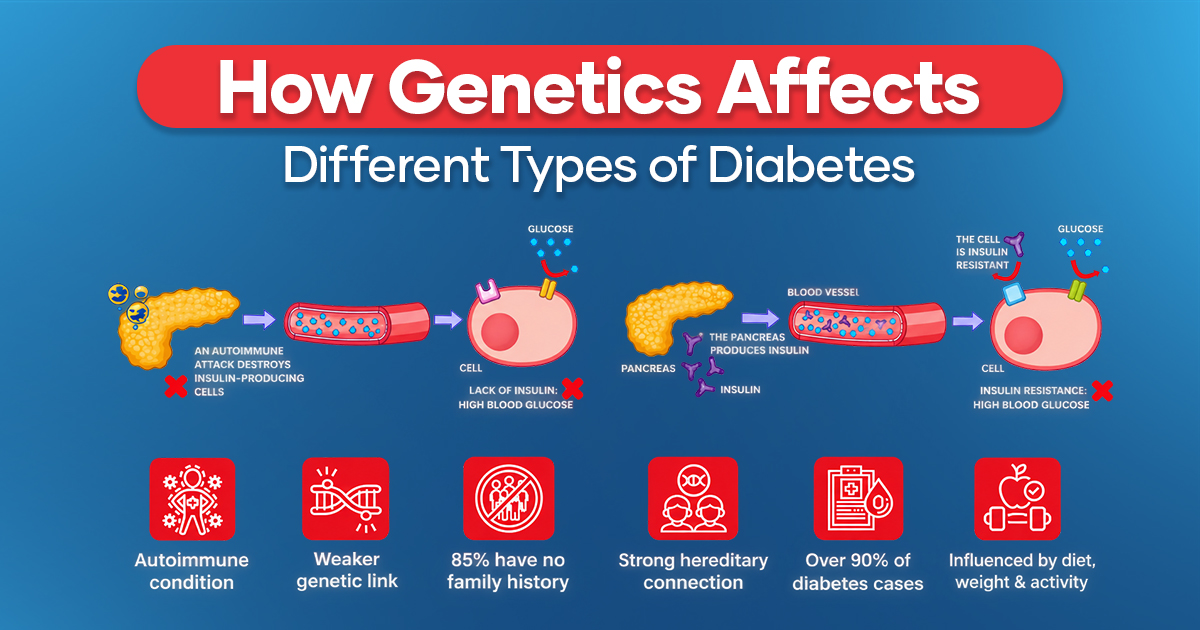
Type 1 diabetes is an autoimmune condition. The immune system mistakenly attacks insulin-producing cells in the pancreas, leaving the body with little or no insulin.
Certain genetic variations, including those in the HLA gene region, are associated with a higher risk. Environmental factors may also contribute, although researchers are still studying the exact causes.
Having a parent or sibling with type 1 diabetes can increase a person’s risk, but most people who develop the condition do not have an affected close relative. It can begin during childhood, adolescence, or adulthood. It is not caused simply by eating too much sugar or having an unhealthy lifestyle.
2. Type 2 Diabetes: Genetics, Lifestyle, and Other Risk Factors
Type 2 diabetes is the most common form of diabetes. It develops when the body does not respond effectively to insulin and may eventually struggle to produce enough to maintain healthy blood sugar levels.
Genetics plays an important role. Having one or both parents with the condition, or having an affected sibling, can increase your risk. Other contributing factors include:
- Physical inactivity and excess body weight, particularly around the waist
- Increasing age and a history of prediabetes
- Previous gestational diabetes
- Certain health conditions and medications
- Sleep, stress, food access, and other environmental influences
These factors affect people differently. Someone who maintains a balanced diet and exercises regularly can still develop diabetes. The condition should not be viewed simply as the result of personal choices because biology, genetics, and access to healthcare also matter.
3. Gestational Diabetes: Can It Run in Families?
Gestational diabetes develops during pregnancy when the body cannot produce or use enough insulin to meet its changing needs. Pregnancy hormones can make insulin less effective, causing blood sugar levels to rise.
Family history can increase risk, along with previous gestational diabetes, prediabetes, and other health factors. Blood sugar levels often return to their usual range after delivery, but having gestational diabetes increases the mother’s future risk of type 2 diabetes. Follow-up testing after pregnancy is therefore important.
What Are the Chances of Developing Diabetes If It Runs in Your Family?
There is no single percentage for everyone with a family history of diabetes. Your risk depends on the type of diabetes, your relationship to the affected family member, and other health factors.
Understanding type 1 vs type 2 diabetes helps explain these differences. Type 1 diabetes involves an autoimmune response, while type 2 diabetes is linked to insulin resistance. Gestational diabetes follows a different pattern involving pregnancy-related changes.
Your age, blood sugar levels, and medical history can help determine whether screening is appropriate. If diabetes runs in your family, discuss your risk with a healthcare professional, even if you have no symptoms.
Can You Prevent Diabetes If It Is Genetic?
You cannot change your genes, but having an increased genetic risk does not make diabetes inevitable. For type 2 diabetes, certain lifestyle changes may help people at increased risk delay or reduce their chances of developing the condition.
- Eat balanced meals. Include vegetables, whole grains, beans, and sources of protein.
- Stay physically active. Walking, cycling, and other regular activities can help the body use insulin more effectively.
- Discuss weight management if appropriate. Modest weight loss may lower risk for people with excess body weight.
- Prioritize sleep and regular health checks. Screening can identify blood sugar changes before symptoms appear.
These steps cannot guarantee prevention. There is currently no established lifestyle routine that reliably prevents type 1 diabetes. A healthcare professional can help you understand your individual risk and appropriate screening options.
Type 1 Diabetes
Help Advance Type 1 Diabetes Research
Explore a Type 1 Diabetes clinical trial and help shape the future of diabetes care while receiving study-related support if you qualify.
What Are the Warning Signs of Diabetes?
Diabetes may develop without noticeable symptoms, especially in its early stages. Common warning signs include:
- Increased thirst and frequent urination
- Increased hunger
- Unexplained weight loss
- Persistent fatigue
- Blurred or cloudy vision
- Slow-healing cuts or sores
- Frequent infections
Type 1 diabetes can cause symptoms that develop quickly, while type 2 diabetes often progresses gradually, making early signs easy to overlook.
Seek emergency medical care for vomiting, abdominal pain, deep or rapid breathing, fruity-smelling breath, or severe drowsiness. These may indicate diabetic ketoacidosis (DKA), a life-threatening complication.
Read also: Does Diabetes Cause Weight Gain? Understanding the Link Between Diabetes and Body Weight
How Is Diabetes Diagnosed?
Healthcare professionals use blood tests to diagnose diabetes, including:
- A1C test: Measures average blood sugar over two to three months.
- Fasting blood glucose: Measures blood sugar after fasting.
- Oral glucose tolerance test: Checks how the body processes sugar.
- Random blood glucose: Measures blood sugar at any time.
Diabetes-range results include an A1C of 6.5% or higher, fasting blood glucose of 126 mg/dL or higher, or a two-hour glucose tolerance result of 200 mg/dL or higher. Repeat testing is usually needed to confirm the diagnosis unless symptoms clearly indicate diabetes.
Can Diabetes Be Caused by a Single Gene?
Most common forms involve multiple contributing factors, but rare conditions called monogenic diabetes result from a change in a single gene. A healthcare professional may suspect these conditions when diabetes begins unusually young or appears across several generations. Genetic testing may help identify the cause and guide appropriate care.
Clinical Trials and Diabetes Research: What Are Researchers Exploring?
Researchers are studying diabetes from different angles to better understand how the condition develops and how it can be managed.
Endocrinology research studies focus on hormones and metabolism, including how they affect blood sugar regulation. Type 1 diabetes clinical trials may explore how the immune system contributes to the condition and investigate potential approaches to treatment. Other clinical research studies may evaluate new treatments, blood sugar monitoring methods, or ways to identify diabetes earlier.
Each study has its own eligibility criteria, procedures, and potential risks. Participation is voluntary and does not guarantee a particular outcome. A healthcare professional can help you understand available studies and decide whether participation may be right for you.
Type 1 Diabetes
Help Advance Type 1 Diabetes Research
Explore a Type 1 Diabetes clinical trial and help shape the future of diabetes care while receiving study-related support if you qualify.
Conclusion
So, is diabetes genetic? Yes, inherited genes can influence your risk, but they do not tell the whole story. Type 1, type 2, and gestational diabetes develop differently, and each involves a combination of contributing factors. Knowing your family history can help you understand your risk, but it cannot predict your future with certainty.
If diabetes runs in your family, speak with a healthcare professional about screening and steps that support your health. Zillan Clinical Research recognizes the importance of continued research in understanding conditions such as diabetes and evaluating potential approaches to detection and care. Clinical research helps expand medical knowledge, although individual studies vary in purpose and eligibility.
Frequently Asked Questions
What are the warning signs of diabetes?
Common signs include increased thirst, frequent urination, fatigue, unexplained weight loss, blurred vision, and slow-healing wounds. Some people have no symptoms.
What are the major causes of diabetes?
Type 1 diabetes involves an autoimmune response, type 2 is linked to insulin resistance, and gestational diabetes develops during pregnancy when insulin needs increase.
What are the 5 worst foods for diabetics?
Sugary drinks, candy, pastries, refined carbohydrates, and desserts high in added sugar can make blood sugar harder to manage when consumed frequently.
Can you have diabetes without a family history?
Yes. Diabetes can develop even without a family history because genetics is only one contributing factor.
Can genetic testing tell you whether you will develop diabetes?
No. Genetic testing cannot reliably predict all cases of diabetes, though it can help identify certain rare inherited forms.
Medical Disclaimer: This blog is for educational purposes only and is not a substitute for any medical advice, diagnosis, or treatment. Consult a qualified healthcare professional for guidance about your individual health needs.