
Oncology
Hereditary Cancer Clinical Trial Focused on Cancer Prevention Through Genomic Risk Assessment

Prevent Cancer Research
Cancer Prevention Research Study
Cancer risk is not always random, as many cancers are hereditary and caused by inherited gene changes passed down in families. These mutations can increase the risk of cancers like breast, ovarian, and colorectal cancer, especially in those with a family history. Often, these risks go unnoticed until early intervention is no longer possible, highlighting the need for better understanding and preventive measures.
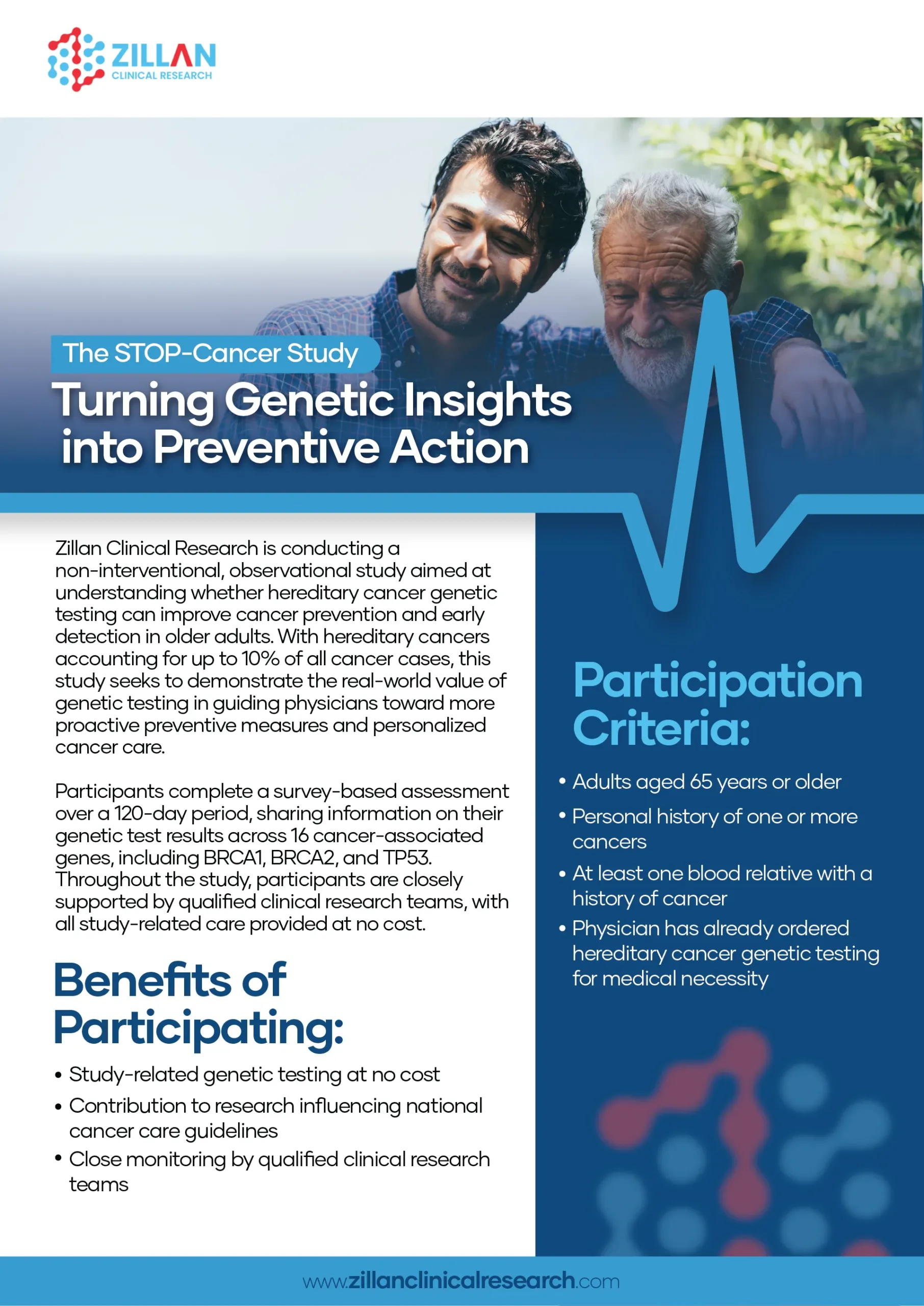
Zillan Clinical Research is conducting an observational study evaluating the clinical value of hereditary cancer genetic testing in adults aged 65 and older with a personal history of cancer. The study aims to understand how genetic insights can guide physicians toward better preventive measures and earlier, more targeted treatment decisions.
Bringing Genetic Insights to Cancer Prevention Through a Hereditary Cancer Clinical Trial
Hereditary cancers account for a significant portion of cancer cases worldwide, yet many people are unaware of the genetic risks they carry. Without knowing these risks, opportunities for early prevention and timely treatment are often missed, making hereditary cancer one of the more challenging and serious health concerns for older adults.
The ongoing STOP-Cancer study is evaluating genetic testing across 16+ cancer-associated genes in adults aged 65 and older with a personal and family history of cancer who have already been prescribed medically necessary genomic testing. It seeks to understand how these results may help physicians tailor prevention and care strategies. Participation is voluntary and free of cost.
Now Enrolling
Evaluating genetic testing to prevent hereditary cancer
Study Objective
Why Patients Trust Us
At Zillan Clinical Research, we conduct ethical, high-quality clinical studies focused on patient safety, scientific integrity, and advancing innovative treatments for better health outcomes.

Integrity
Conducting all studies with honesty, transparency, and strict ethical standards

Patient Safety

Scientific Excellence

Innovation

Diversity & Inclusion

Trusted Oversight
FAQ
Frequently Asked Questions
What is the Strategic Targeting for Optimal Prevention of Cancer study?
This is an observational study evaluating the clinical benefits of hereditary cancer genetic testing in adults aged 65 and older with a personal and family history of cancer.
Who can join this hereditary cancer clinical trial?
Adults aged 65 and older with a personal history of cancer and at least one blood relative with a history of cancer, whose physician has already ordered hereditary cancer genetic testing for medical necessity, may be eligible.
Are there cancer prevention research studies?
Yes. A hereditary cancer clinical trial is currently being conducted at Zillan Clinical Research in [Location], evaluating the real-world benefits of cancer prevention genetic testing for adults with a personal and family history of hereditary cancer.
What is the purpose of cancer prevention genetic testing in this study?
The study evaluates whether hereditary cancer genetic testing across 16 cancer-associated genes, including BRCA1, BRCA2, and TP53, can help physicians make earlier and more informed prevention and treatment decisions.
What happens during the study?
Participants complete a survey over a 120-day observation period, covering their genetic test results, physician-recommended treatments, lifestyle changes, and medical history.
Is participation safe and free of cost?
Yes. The study is conducted under strict clinical guidelines at Zillan Clinical Research, with close monitoring throughout, at no cost to participants.
Still have questions? Our team is here to support you with your clinical research needs.
Join Us
Supporting Innovation
Through Structured Clinical Trials
Join studies designed to advance medical knowledge and support the development of next-generation therapies.